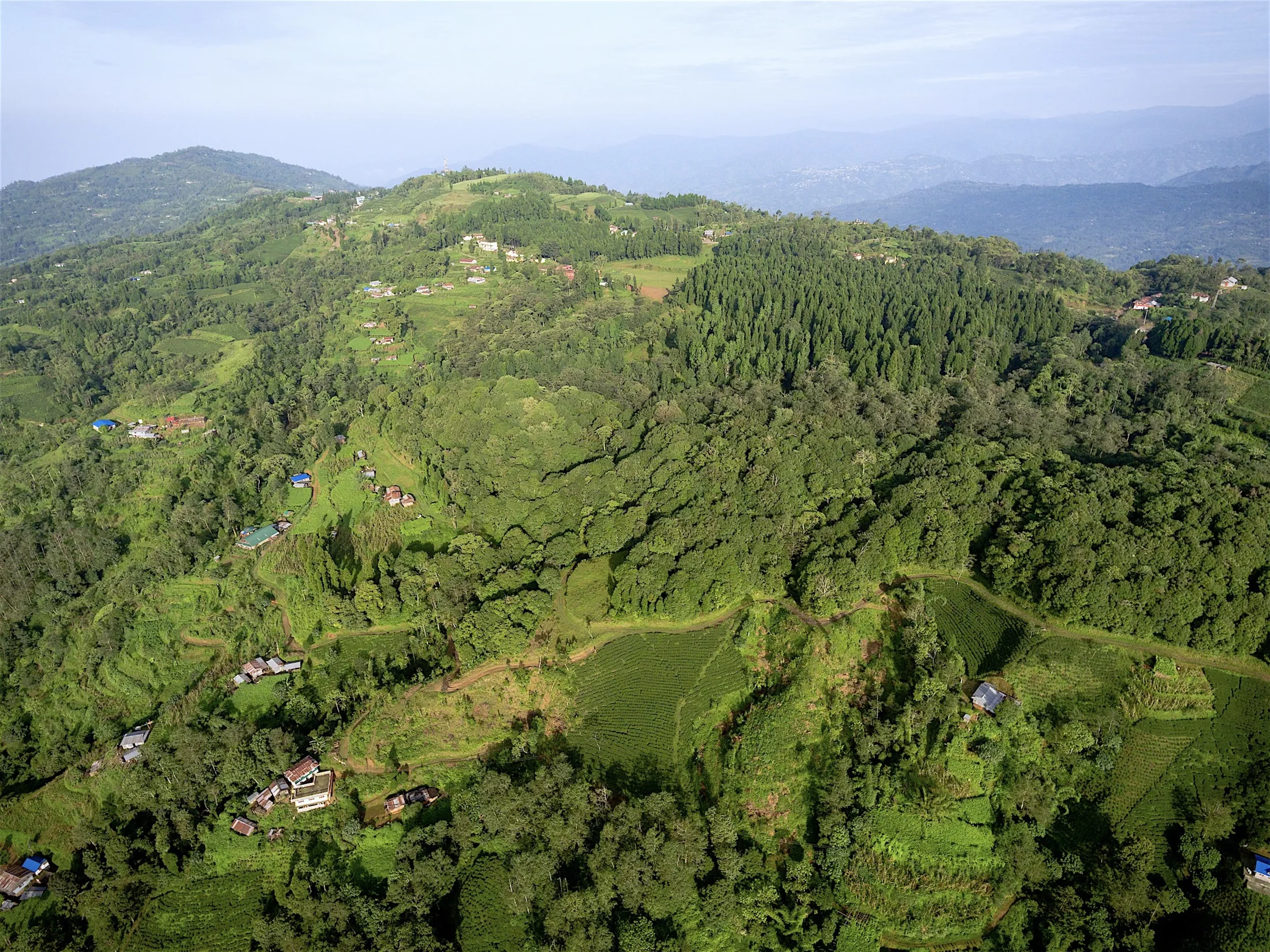

Cultivated hills and tree cover at Suryodaya, Nepal

AGRICULTURAL PROJECT DEVELOPMENT

Regenerative agriculture.
Rooted in Nepal.

We connect small-scale farms, regenerative agriculture, food processing and markets to build long-term commercial and community value in Nepal.

We welcome investors, coffee buyers and implementation partners.

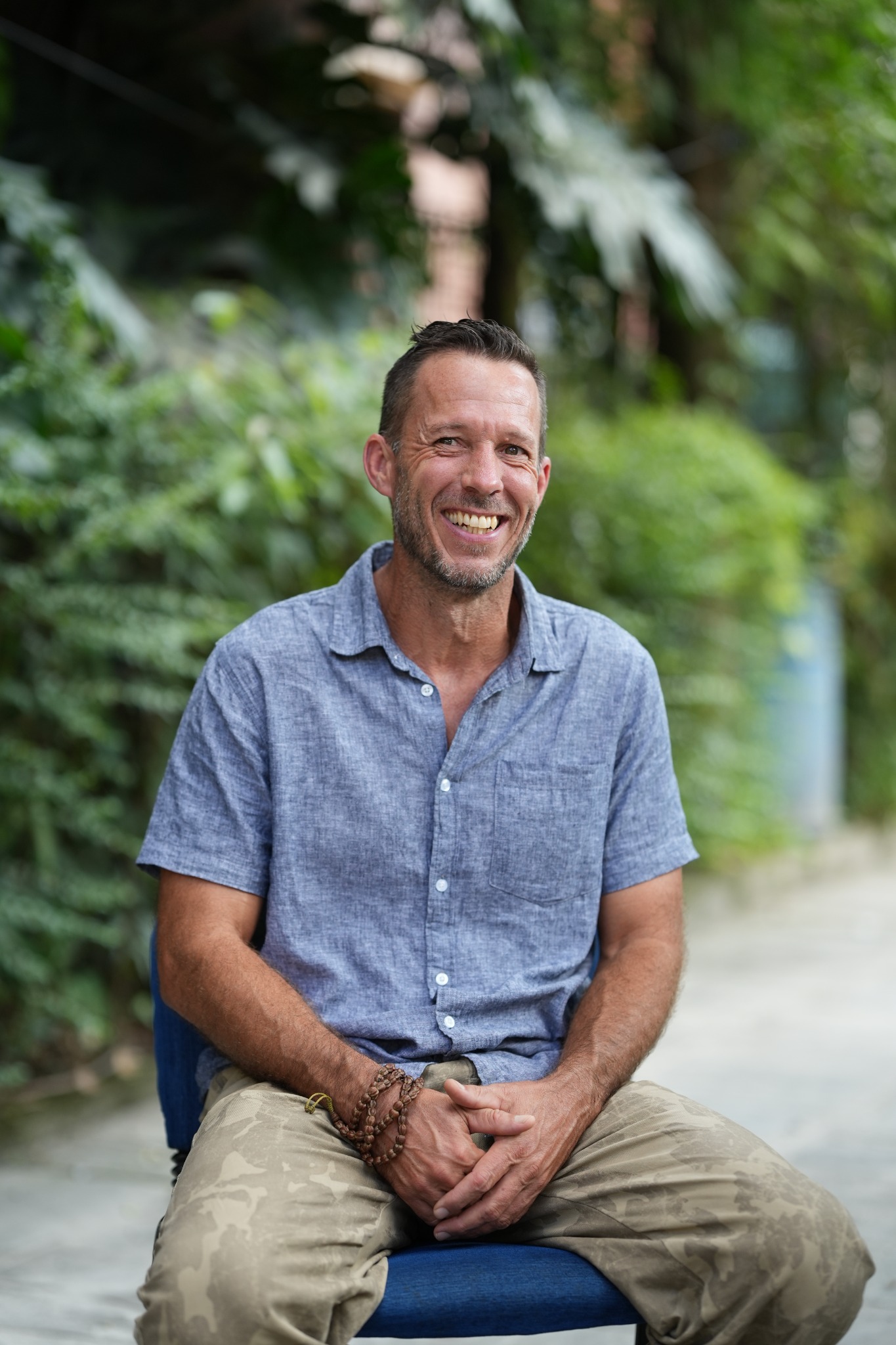
Ruby Karki during the Himalayan Earth Capital interview
IN CONVERSATION WITH RUBY KARKI

Regenerative agriculture, farmer prosperity and the proposed Nepal coffee business.

Watch on YouTube
LOCAL KNOWLEDGE. COMMERCIAL DISCIPLINE.NEPAL
Focus
Coffee agroforestry
Geography
Koshi Province, Nepal
Stage
Project development
01 / APPROACH

Connecting the farm
to the market.

We are developing a coffee business in East Nepal around the qualities buyers need: flavour, consistency, traceability and dependable delivery. Our approach brings farmer partnerships, regenerative farm design, processing and market development into one coordinated model to build that supply.

Himalayan Earth Capital connects capital and commercial partners with this Nepal-based development team. Our proposed coffee program links farm design to buyer requirements: farmers retain land ownership, while the business aims to earn a margin on coffee sales.

THE PROPOSED COFFEE MODEL
  1. Farmers

    Agree participation, payment and delivery terms.

  2. Cultivation

    Coordinate planting, soil and water management, and training.

  3. Processing

    Purchase cherry and manage processing, quality and traceability.

  4. Buyers

    Match green coffee to customer specifications and net prices.

Measurement across every stage

Production, quality, farmer economics and land health.

Farmer economics and land health support durable production. The first phase will test commercial viability alongside these outcomes.

Coffee sales underpin the proposed economics. Environmental credits are potential upside and are excluded from the base case.

02 / LIVING LANDSCAPES
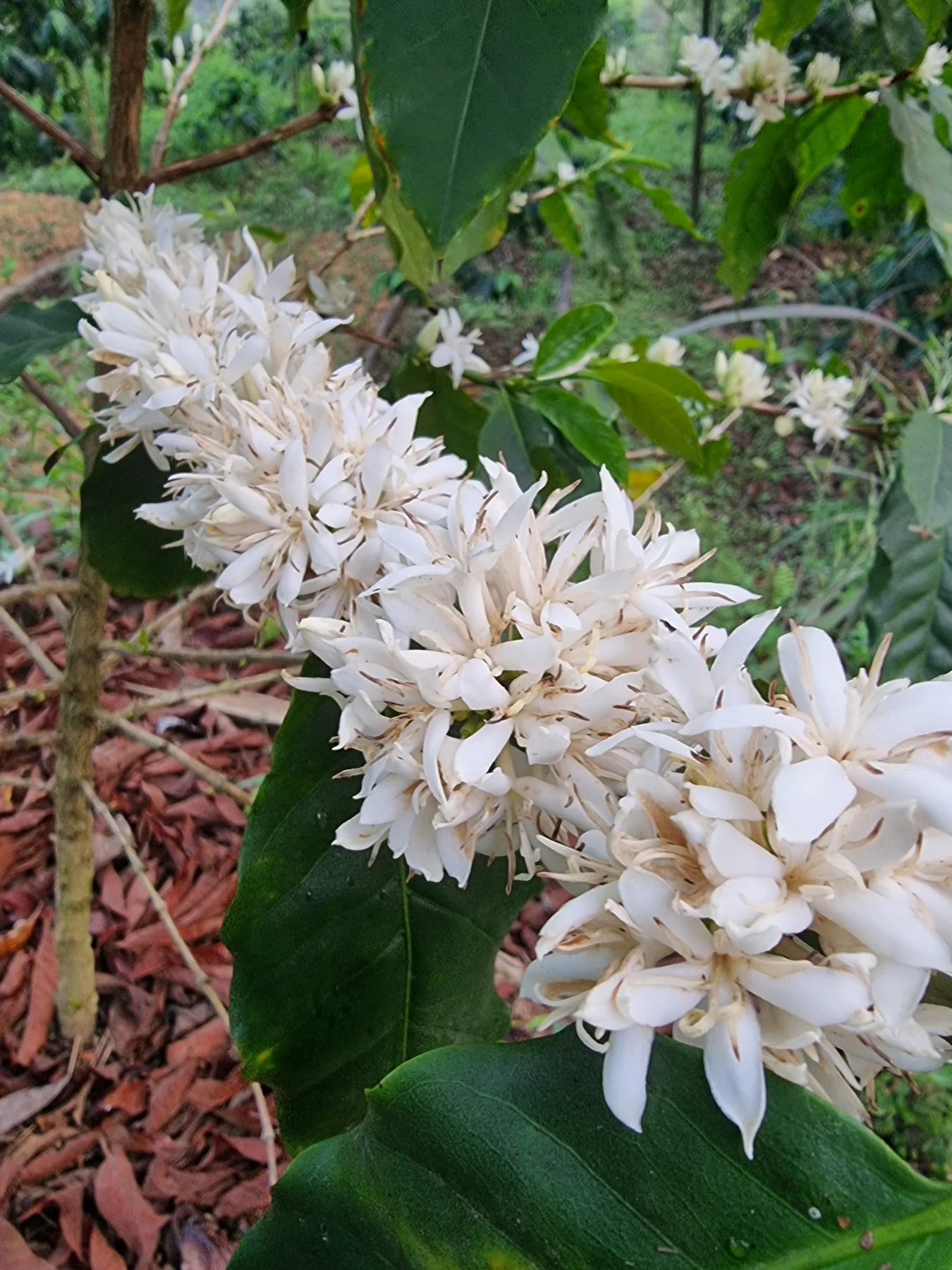
White coffee flowers growing along leafy branches
Coffee in flower · from the team’s field archive.

Grow good food.
Build living systems.

Regenerative agriculture means growing high-quality food while working to improve soil, water, biodiversity and farmers’ livelihoods.

We design the farm as a living system. Crops, trees and inputs should support one another, with choices adapted to the site and the family farming it.

Living soil
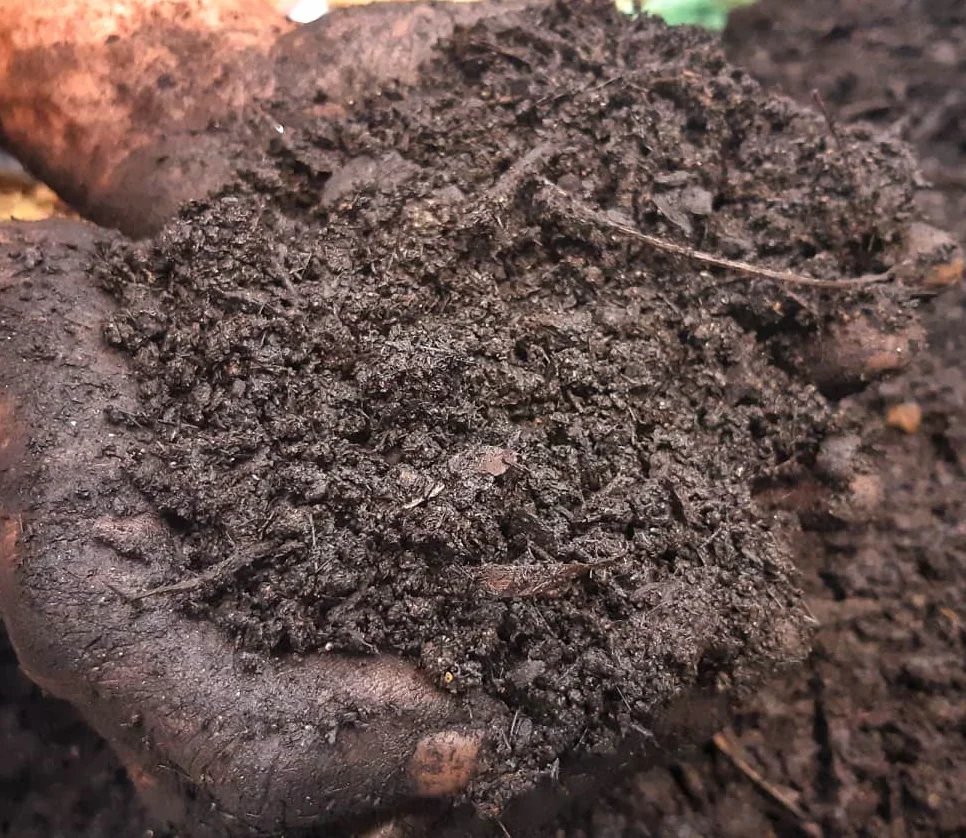
Keep soil covered, return organic matter and use compost and biological inputs suited to local conditions.
Productive diversity
Combine a primary crop with compatible shade trees, fruit, ground cover and other useful species.
Water & habitat
Design soil cover, tree cover and water management together, with attention to the surrounding landscape.

FARMER PROSPERITY

A good business decision
for the family.

Participation needs to work within a household’s labour, cash and food needs. Our design priorities include transparent prices, timely payments, clear quality standards and a meaningful farmer voice. The pilot design must also address establishment costs, household needs before coffee income begins, and how production and market risks are shared. Prosperity should be judged through net income and food security, alongside crop sales.
VALUE CREATED LOCALLY

More opportunity
around the farm.

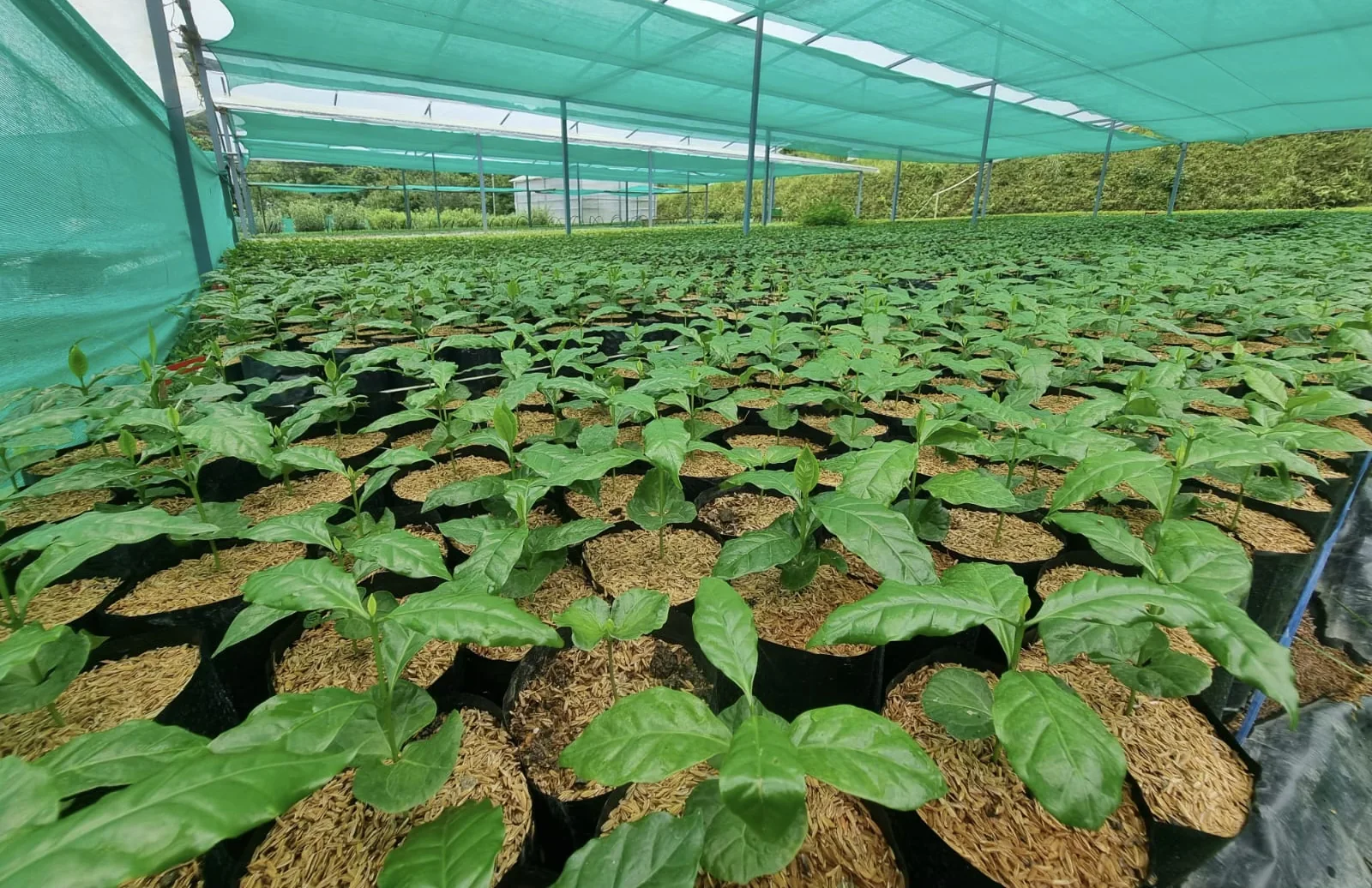
Nurseries, compost, biological inputs, processing and transport can create local enterprises and work beyond farming. Where practical, agricultural residues can return to the land as useful inputs. These opportunities belong in the business design from the start.

03 / CURRENT FOCUSIN DEVELOPMENT
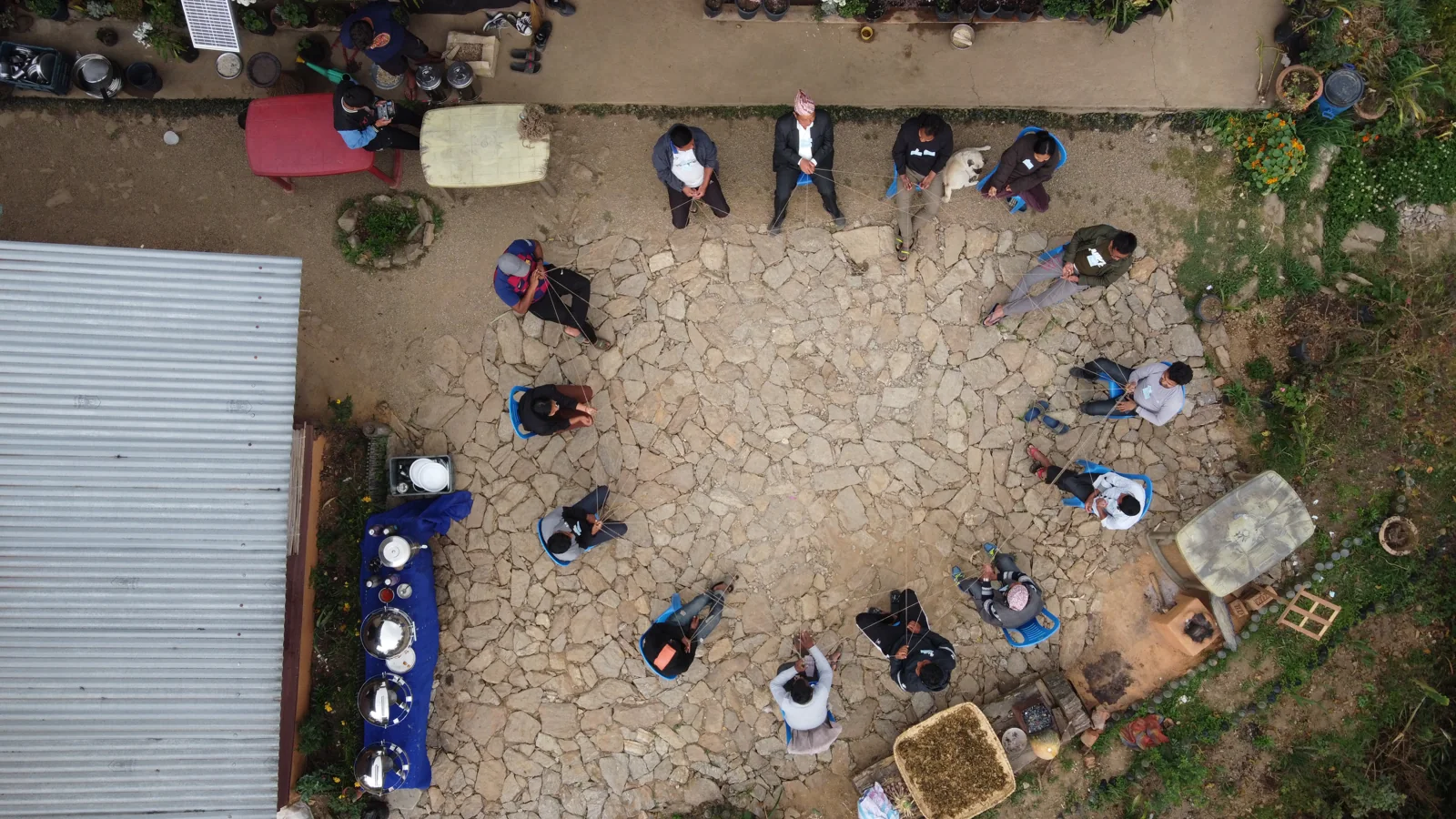
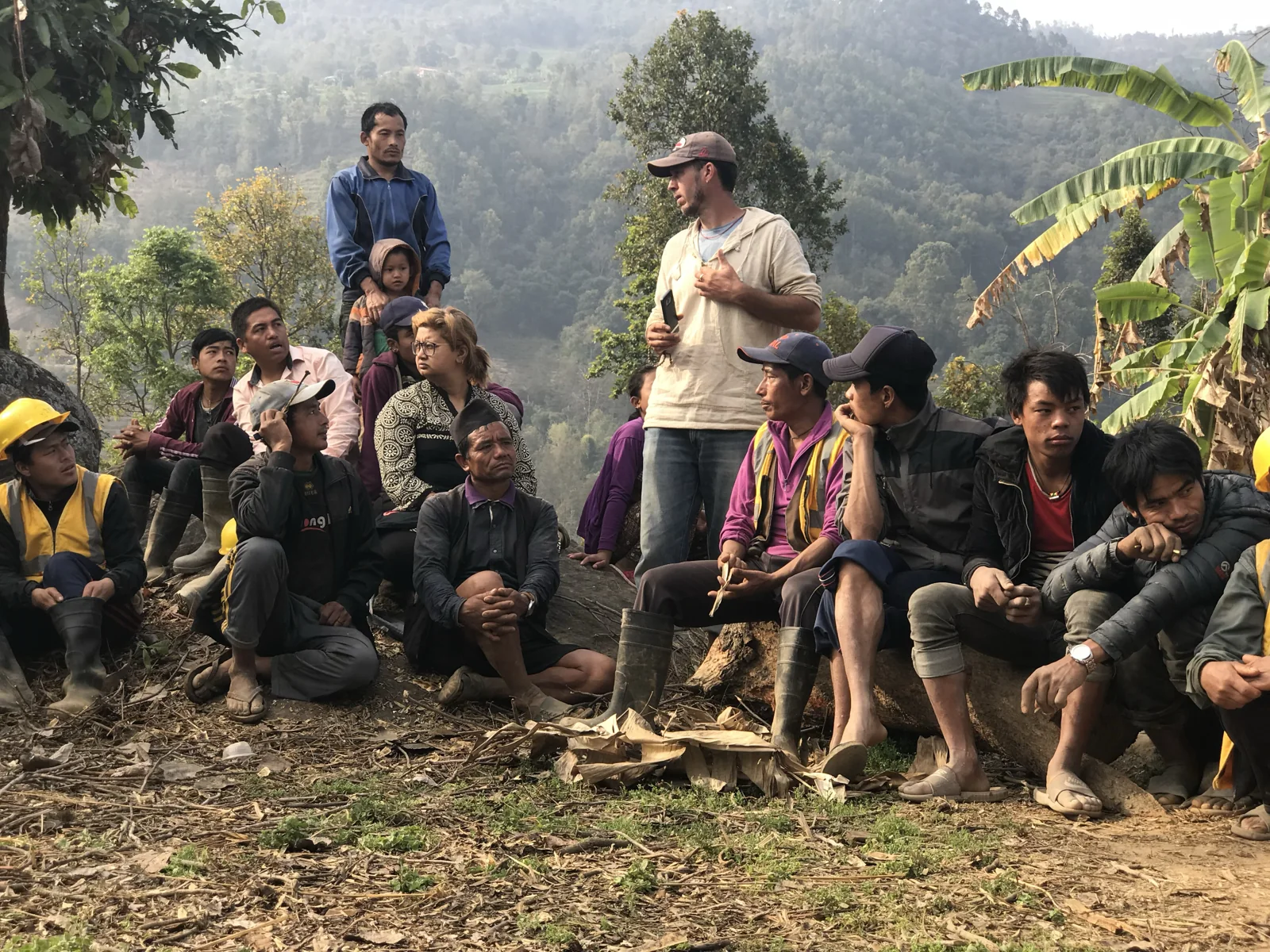
Zachary Barton speaking with a group during a village field session in Nepal
Zachary Barton in a village field session.

East Nepal
coffee agroforestry.

Our initial program is designed around Arabica coffee grown with shade trees on participating farmers’ land.

We are planning a 200–500 hectare pilot to test production, quality, buyer demand and full operating costs before expanding.

Planned pilot
200–500 hectares
Product
Green Arabica coffee
Land model
Participating farmer-owned land

The pilot range is a development plan, not secured or planted hectares. Its exact footprint, budget and financing structure are being defined. Expansion will depend on field results, farmer agreements, buyer demand and financing.

THE CASE FOR EAST NEPAL

Why coffee in East Nepal?

A crop suited to the landscape.

Arabica is already grown in Nepal’s mid-hills. Selected sites in East Nepal offer a credible setting for coffee agroforestry, with suitability assessed through temperature, soils, drainage, water availability and exposure alongside elevation.

Practical experience in the region.

Almost Heaven Farms’ work in East Nepal gives us a foundation in farm design, soil health, biological inputs and farmer training. Our coffee agroforestry design work in Sankhuwasabha connects that experience directly to the proposed program.

A business built around quality and origin.

We aim to develop traceable East Nepal Arabica for specialty buyers, combining farmer production with consistent processing, quality control and dependable delivery. The opportunity is to earn a margin on coffee sales while retaining more value through local processing and services. Achievable prices, demand and operating margins still require validation.

Farmer prosperity. Productive landscapes.

Our proposed systems combine coffee with compatible shade, fruit and other useful plants, supported by soil and water management. Coordinated technical support, transparent farmer payments and shared processing aim to make quality production commercially workable for both farmers and the business.

WHAT CAPITAL ENABLES

Financing the transition to dependable production.

The next phase needs capital for farm establishment, technical support, shared processing and working capital for timely farmer payments. Our intended approach is to stage financing and expansion as evidence develops on farmer participation, production, quality and buyer demand.

FROM EXPERIENCE TO EVIDENCE

What the pilot must establish.

The coffee farms remain in development. We bring field experience and a developed program design. Independent cup scores, coffee-quality test results, named buyer evaluations and committed purchases have not yet been documented for the proposed program.

The pilot must build that evidence through sample testing and actual transactions.

Field performance

Plant establishment, grower participation, yields and a workable production system.

Quality & buyer demand

Cup quality, independent sample testing, buyer evaluations and willingness to pay demonstrated through actual transactions.

Complete economics

Processing recovery and full delivery costs, including farmer payments, processing, transport, staffing, finance and working capital.

04 / A WIDER LANDSCAPE

The right crop.
In the right place.

Coffee is our initial focus. The wider approach is built for Nepal’s varied landscapes.

Elevation, climate, farmer priorities and access to markets shape each design. Opportunities beyond coffee need their own field trials, cost evidence and buyer validation.

BUILD ON EXISTING PRODUCTION

Strengthen what works.

Explore ways to improve quality, processing and market access for crops already grown in Nepal, including tea, cardamom, ginger, turmeric and fruit.

DIVERSIFIED AGROFORESTRY

Give every layer a role.

Combine compatible trees, a main commercial crop and understory planting. Shade, biomass, soil cover and different harvest periods can serve the whole system.

RESEARCH & VALIDATION

Test new possibilities.

The cacao development proposal explores suitable lower-elevation sites in eastern Nepal. Genetics, field performance, fermentation, flavour and buyer demand need validation before commercial expansion.

FOOD TRANSFORMATION & VALUE ADDITION

Processing connects a harvest with a saleable product. Depending on the crop, this can include drying, fermentation, grading, roasting or specialty ingredients. The aim is dependable quality, traceability and more value retained locally.

These are development opportunities and design options, not a portfolio of financed or operating Himalayan Earth projects.

06 / TEAM

Institutional experience.
Practical field knowledge.

Our team brings together agricultural implementation, institutional partnerships, forestry and environmental measurement. Together, these capabilities connect field delivery with the commercial and operational evidence needed to develop the pilot.

Ruby Karki

CO-FOUNDER & MANAGING PARTNER

Ruby Karki

Institutions & program development

Ruby connects climate and development programs with institutions, donors and public policy. Her experience includes knowledge management supporting the World Bank’s Green, Resilient and Inclusive Development (GRID) work in Nepal, the Maldives and Sri Lanka, and intergovernmental processes involving ECOSOC and UN DESA at UN Headquarters in New York. She brings program design, institutional coordination and resource mobilization to Himalayan Earth.

Selected experience
  • World Bank knowledge management and communications consulting for the Nepal Forest Landscape Programme.
  • UNEP / FAO research and consultation for an integrated climate-responsive development framework.
  • Strategic partnership experience with RRN, LDC Watch and SAAPE.
  • RRN / DFID community development work (2019), connecting local implementation with social and environmental requirements.
  • COP29 contribution on loss-and-damage finance and access for rural and grassroots communities. Read the event report.
  • MA in Democracy and Governance, Georgetown University.
LinkedIn profile
Zachary Barton

CO-FOUNDER & MANAGING PARTNER

Zachary Barton

Agroecology & field delivery

Zachary has worked in Nepal since 2003 and founded Almost Heaven Farms in 2013. His work combines coffee agroforestry, farm design, soil health, biological inputs and farmer training. He is co-developing Himalayan Earth's East Nepal coffee program, contributing agronomic design, establishment budgets, planting-material specifications and the field evidence needed for investment review.

Selected experience
  • More than two decades working in Nepal, connecting permaculture design, farmer training and community development with practical opportunities for regenerative agriculture.
  • Founded Almost Heaven Farms in 2013, building a rural-based research, demonstration and consultancy enterprise whose work includes 550,000+ saplings grown and 186,000+ trees planted.
  • Advances applied agroecology through Himalayan Agroecology Research & Development (HARD), combining biological-input research, field demonstrations and farmer training to turn soil science into practical growing systems.
  • Has designed and developed agroforestry systems for East Nepal, integrating coffee, fruit, nuts, spices and supporting trees into systems shaped by local ecologies on 12,000+ hectares of land.
  • Connects farm development with wider community food systems, including work with Phaktanglung Municipality on agroecology, food resilience and food transformation, and partnerships that support local skills, enterprises and farmer livelihoods.

TEAM EXPERTISE

FORESTRY & ENVIRONMENTAL DATA

Zoltan Mityok

Zoltan founded SylvaStep Solutions and brings experience in forestry, remote sensing, ecosystem monitoring and land stewardship. His work connects field ecology with satellite, GIS and drone data to support landscape planning, baselines and environmental measurement.

Selected experience
  • Forestry planning, crew leadership and environmental analysis for First Nations, government and conservation partners.
  • Agroforestry and mapping capacity-building work in Nepal, including with Almost Heaven Farms.
  • MSc in Forestry, University of British Columbia.

KNOWLEDGE & FIELD COORDINATION

Sunraker Gyatso Karki

Sunraker is a knowledge management and development communications specialist at CDDN. He links field teams, research and institutional decision-making through reporting, documentation and stakeholder coordination. His experience includes RRN, SAAPE and LDC Watch, with work spanning program learning, policy communications and community evidence.

Selected experience
  • Coordinated reporting between field personnel and leadership during a land survey covering more than 3,000 ha.
  • Research, institutional documentation and knowledge products for development organizations.
  • MA in Contemporary China Studies, Renmin University; BA in International Relations, Webster University.

Professional experience includes work undertaken at other organizations. Zachary’s sapling, tree and hectare figures relate to his prior work, not the footprint or results of HEC’s proposed coffee pilot. These references do not imply organizational endorsement or financing commitments.

WORK WITH HIMALAYAN EARTH

Who we want
to hear from.

We are seeking producer groups, coffee buyers, implementation specialists and capital partners to develop the East Nepal pilot. The next step is to align farmer participation, quality and delivery requirements, and financing through establishment and market validation.

INVESTORS & CAPITAL PARTNERS

Discuss investment fit.

Investors focused on agriculture, food systems or natural capital. Discuss the proposed pilot’s capital needs, milestones and fit with your mandate.

COFFEE BUYERS

Explore future sourcing.

Roasters, importers and specialty coffee businesses. Discuss the quality, processing, traceability and delivery requirements a future Nepal supply program would need to meet.

IMPLEMENTATION PARTNERS

Define a delivery role.

Farmer organizations, agronomy teams, processors and technical partners. Discuss how your capabilities could support pilot establishment, grower training, processing or field measurement.

START A CONVERSATION

Contact Himalayan Earth

We welcome investors, coffee buyers and implementation partners interested in our proposed Nepal coffee pilot.

Investors & capital partners
Your investment focus and the milestones you would need to see.
Coffee buyers
Your sourcing interests, quality standards and traceability requirements.
Implementation partners
Your capabilities and the role you could play in project delivery.

Tell us your organization, area of interest and what you would like to explore.

You can also connect with Ruby Karki on LinkedIn.

Use a short introduction

Paste it into an email to contact@himalayanearthcapital.com.